
I. SPRING
The light was already there.
Pale on the wall.
A woman was crying, and someone said it was a boy. He would know none of this. Much later, there would be stories. His mother would remember rain, his father sun, and as the years passed that first morning would change each time they told it. Some things would become more precise. Others would disappear without anyone knowing when. The sky would go first.
The light would remain.
Milk. Sleep. The warm smell of his mother’s skin. A hand reaching for him, a finger closing around his, the cold bars of the cot, water over his head, a voice beyond the room.
The world came in slowly.
By the time he could crawl, there was a floor beneath his hands and a corridor beyond the door. The corridor was long, and from there he could hear the house before he could see it: water moving through the pipes, a cupboard closing, his mother’s voice in the kitchen. In the afternoons, sunlight crossed the tiles and climbed slowly up the wall, and sometimes he would sit watching it until it disappeared.
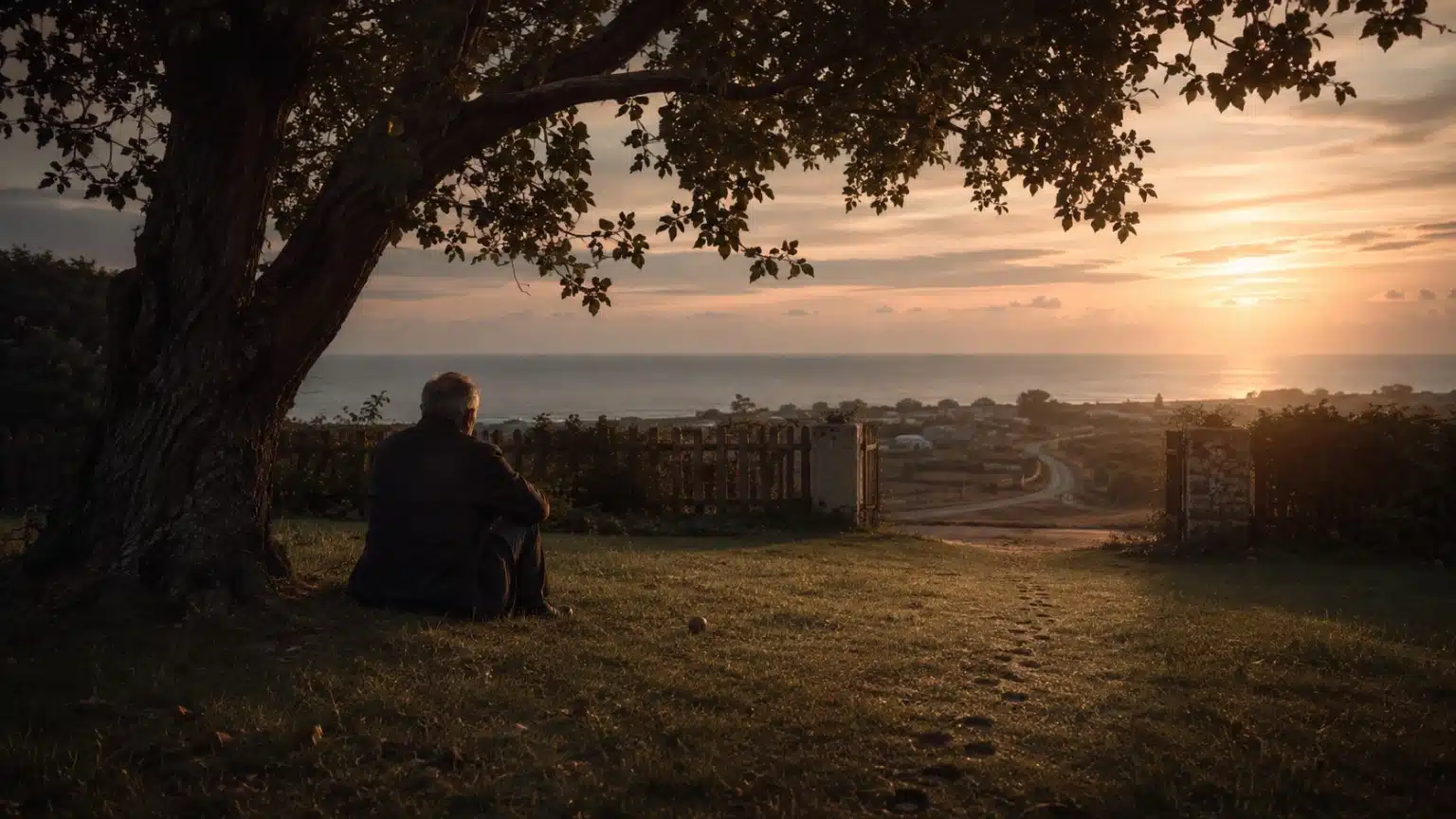
Outside there was grass, one tree, and a fence.
Enough.
The first time he stood, he held on to the edge of a chair and pushed himself up. His whole body trembled, and for a moment the room seemed to be beneath him. His mother stopped moving.
He looked at her.
She looked at him.
Neither of them knew what to do with the moment.
Then he fell.
His mother reached him before the crying began and pulled him against her chest. He buried his face in her neck. She smelled of soap and something that had always been there, something he had no name for yet. When he stopped crying, he looked back at the room from her arms and found it unchanged.
A few days later he stood again.
Then again.
And again.
After that, the house began to change, not because anything in it had changed, but because he could now reach things. He opened cupboards, pushed at doors he had been told to leave closed, crawled beneath the bed and came out with dust on his hands. He found dead insects on the windowsill, coins behind the furniture, a spoon someone had lost.
There was always something.
He learned to run without knowing he was learning. First a few steps, then to the door, then into the garden. One afternoon he ran from the kitchen to the tree and stopped there, surprised by how far he had come. The wind moved the leaves above his head, and his mother was calling him from the house.
He turned.
Smiled.
Then ran back.
Sometimes he fell hard enough to bleed. Then there would be someone’s hands, cold water over his knee, the yellow liquid that stung, a plaster. After that he went outside again, because the door was still open and the garden was still there.
Nothing seemed to be going away.
That was how childhood passed. Not because everything stayed, but because he had not yet learned to look at what was missing.
The tree put out leaves and lost them. Rain filled the gutter beneath his window. His shoes became too small before he understood why. On the kitchen wall, the pencil marks climbed slowly while his mother’s hand followed them, holding the ruler.
Birthdays came with candles and numbers. He closed his eyes, blew, and for a moment all the flames leaned in the same direction. Smoke hung above the cake before someone opened a window.
Morning returned.
One summer, his father took him to the sea.
The journey was long. He watched through the window, asked how much farther, and heard the same answer several times.
Soon.
When they arrived, the air was different. It smelled of salt, and there was sand along the edges of the road. Gulls walked among the people as if the place belonged to them too.
Then he saw it.
The water.
Until then, water had always belonged to something: a bath, a glass, the dark basin of the kitchen sink. The sea was different. It did not seem to fit anywhere.
He went down to it with his father.
The sand was hot on the surface and cool when his feet sank into it. They waited together as a wave came from far out and broke in front of them. Foam moved over the sand, covered his shoes, and withdrew.
He looked down.
Another wave touched his ankles and he ran back.
His father laughed.
He laughed too.
They waited for the next one.
It came higher and covered his legs. This time he did not run. When the water went back, the sand gave beneath his feet and his toes sank into it.
He looked at his father.
“It moves.”
His father looked down.
“It’s the sand.”
But he kept watching. For a moment he had the feeling that the whole earth was moving.
Years later, he would not remember the words.
He would remember that feeling.
And his father’s laugh.
The face would disappear from the memory before the laugh did.
The dog was still young. It slept beneath the tree during the hottest hours of the afternoon, and when he sat beside it, it would open one eye before closing it again. Whenever he got up, it followed.
They ran through the garden, across the fields, and down the road until someone called them back. The dog always returned first. He stayed a little longer.
Once they reached the end of the road. The dog stopped, turned, and waited. He wanted to keep going, but eventually he went back with it.
The dog knew when to stop.
He didn’t.
The years passed, and grey began to appear around the dog’s muzzle. At first he noticed. Once he even lifted its head in both hands to look at the new hairs. Later he stopped noticing. The dog was still there.
Until one morning it could no longer stand.
He found it beneath the tree and called its name. One ear moved.
He called again.
Nothing.
His father came out of the house and knelt beside him.
“What’s wrong with him?”
His father took a while to answer.
“He’s very old.”
He knelt and stroked the dog’s head. Its eyes opened.
He wanted to say something.
Nothing came.
His father picked the dog up.
It did not resist.
He followed them to the car. His father opened the back door and settled the animal inside. Before he closed it, the dog lifted its head.
He raised his hand.
The door closed.
The car went down the road and the gate swung shut again.
He stayed there.
He waited.
When it began to get dark, he was still looking towards the road.
His father came back alone.
He said nothing.
The next day his father dug beneath the tree. They told him to stay inside, but he stood by the window and watched the spade enter the wet earth again and again. His father worked slowly, stopping from time to time to catch his breath before continuing.
He did not know how long he had been watching when his father knelt beside the hole. He did something he could not see, then began to cover it.
The earth fell in small heaps until the hole disappeared.
His father ran the blade of the spade across the ground.
He stood there for a moment.
Then he went inside.
He remained at the window.
The garden was empty.
Years later, he would forget almost everything about that day.
Not the sound of the earth.
For a while he stayed away from that part of the garden. Then spring came back, and one afternoon he ran across it without thinking about the tree or the dog. Halfway there, he stopped.
He looked at the ground.
The grass had grown back.
The tree was taller.
There was no sign.
He stood there for a while, then ran on.
His body began changing before he understood that it could. His legs grew longer, his clothes became too small, and one afternoon his voice broke in the middle of a sentence. The others laughed and he laughed too, but later he was alone and repeated the word quietly, listening to how it sounded.
The corridor no longer seemed long.
The garden was beginning to feel small.
So he started climbing the fence.
The first time he only made it halfway. The second time he reached the top rail. From there he could see the road behind the houses: cars passing and lifting dust, a woman walking with a bag against her hip, two boys appearing at the bend before disappearing behind the houses.
He watched until the road was empty again.
One afternoon he climbed higher than usual and sat on the top rail. The sun had already gone, but the road still held the heat of the day. The fields were darkening. One window came on in one of the houses, then another. Farther away, a dog barked once.
He rested his hands on the wood.
Beyond the fields was the sea.
He could not see it, but he knew it was there.
He stayed until the cold made him climb down.
The next morning he woke before the house. He dressed in the dark, went downstairs, and stood for a moment in the kitchen listening to the silence.
Then he opened the door.
At the gate, he looked back.
The tree was still there.
The house was too.
The road waited.
He went out.
For a while he walked.
Then, after some time, he began to run.
II. SUMMER
He kept running.
At first, the road led nowhere. Then it crossed the fields and continued beyond them. The houses grew farther apart until they disappeared, and the ground changed beneath his shoes. There were roads he had never taken, streets with names he did not know, windows lit at hours when the lights in his own house had already gone dark.
He went farther each time.
Sometimes he came home after everyone was asleep. He left his keys on the table and went upstairs without turning on the light.
No one asked where he had been.
He would not have known how to answer.
There was no particular place.
That was what he wanted.
His body still answered him. A cut closed in a few days, bruises changed colour and disappeared, and he slept badly without feeling there would be consequences. Summer was everywhere: in the heat of the pavement beneath his shoes, in the salt drying on his arms after the sea, in the shirt sticking to his back before noon, in the sweat running down his neck.
Everything seemed close to the skin.
So did desire.
He began noticing girls, first their hands, then the backs of their necks, their hair moving in the wind, the way a room could seem different when someone entered it.
One evening, a girl laughed at something he had said.
He forgot the joke.
For days, he remembered the laugh.
He saw her again near the sea. They walked without deciding where they were going, leaving footprints that the water erased seconds later. Their shadows stretched ahead of them and sometimes seemed to touch when their steps fell together.
She took off her shoes.
He carried them.
The sand was still warm.
When they reached the water, she went in first. The water came over her ankles and she turned.
“Are you coming?”
He looked at her for a moment.
Then he ran towards her.
That time, running did not mean leaving.
Afterwards, it did again.
There always seemed to be something ahead: another road, another night, another body, a train about to leave, a door already open before he had decided whether he wanted to cross it.
He crossed cities without learning their streets. One room became a flat and the flat became another. Jobs appeared and disappeared; some he left, others ended without asking him.
He learned the weight of keys in his pocket, the sound they made when he walked, and how quickly money disappeared when there was a room to pay for, food to buy, rent due. He learned how long a telephone could remain silent before he stopped expecting it to ring.
He slept less and called it freedom. Mornings slipped behind him until he could no longer tell whether he had lost the night or the day.
Meanwhile, his father grew older.
His mother kept telling stories. Sometimes, on the telephone, she would begin one he had already heard. She changed a detail without noticing and said names he had forgotten.
He let her talk.
There was something in her voice he did not want to interrupt.
But he always found another reason to keep going.
The years passed without him seeing them. A street changed, a room disappeared, someone stopped answering, and when the sea appeared again, the beach was not the one he remembered.
He went into the water until his feet could no longer find the bottom. He kept swimming until the shore became small and the voices disappeared.
When he stopped, the water held him.
He lay on his back.
The sky filled everything.
For a while there was no city, no work, no room, no one waiting for him. There was only the slow movement of the water beneath his body.
He closed his eyes.
Then the wind came.
He heard it first.
Then felt it on his skin.
The surface of the water changed, and when he opened his eyes the sky had darkened.
He swam towards the shore.
Rain was moving across the dunes.
He ran.
The wind pressed his shirt against his chest, sand struck his legs, rain entered his eyes and mouth. Behind him, the sea kept breaking with a deep, steady sound.
He slipped.
The world turned once.
When he opened his eyes, he was lying on the sand with rain falling directly onto his face.
He did not move.
For a few seconds he heard only the water, the wind, his own breathing.
Then he got up.
His leg hurt.
He ran.
By the time he reached the house, the storm had passed.
The message was waiting on the table.
His father was ill.
He read it twice, then sat down.
Outside, water was still falling from the roof.
For the first time in a long time, he did not know what to do.
There was nothing he could solve that night.
At dawn he left for the station.
The concourse was full of people leaving. Suitcases rolled across the floor. Doors opened and closed. Voices disappeared beneath the noise of trains and the changing letters above the platforms.
For years he had chosen destinations because they were far away.
This time he chose to go back.
The train left.
The city fell behind, then the houses, then the industrial estates. Later the fields appeared.
He recognised them.
He had crossed them years before on his own feet.
His father was asleep when he arrived.
The room smelled of medicine and closed windows.
He stood in the doorway for a moment before going closer.
His father’s hand lay on the blanket.
He looked at it.
It was small.
He remembered that hand differently: larger, firmer, the one that had led him along the road and dug beneath the tree.
The same hand, resting now on a blanket.
He sat down.
His father opened his eyes.
For a moment he seemed not to recognise him.
He waited.
The clock on the wall marked the seconds.
His father said his name.
He recognised the voice before the face, and for a moment the room disappeared.
He was back in the garden.
The voice calling him from the house.
The dog running ahead.
The tree.
The road.
His father lifted his hand.
He took it.
His father’s fingers closed around his.
For a moment he felt that other hand again, the one that had held his when he was a child crossing a road, the one that had pulled him back when he ran too far.
Now he was the one holding it.
Neither of them spoke.
Outside, the wind moved the first leaves and one struck the window.
Neither looked.
When morning came, his father was asleep.
He was still holding his hand.
He did not know how long he had been there.
He did not want to know.
When he left the room, he walked slowly down the corridor. At the end was the door.
He opened it.
The garden was empty.
The tree was still there.
He stood looking at it.
For years he had always found a reason to keep going: a place, a person, a job, anything that was a little farther away.
Now nothing called him.
He stayed there until the light changed.
III. AUTUMN
For a while, nothing happened.
That was the strange part.
He had spent so many years waiting for what came next that a day without an event felt incomplete. One morning he ran out of habit, but at the foot of the hill he had to stop.
The road was still there.
His body wasn’t.
He bent over with his hands on his knees and waited for his breath to return. A car passed, and the driver raised a hand. He raised his own, though he did not know the man.
When the car disappeared, he kept looking at the bend, the fence, the trees beyond it.
He waited a little longer.
Then he walked home.
The next day he made coffee and stood by the window while he drank it. Rain had fallen during the night, and drops still clung to the leaves. One fell, and the leaf slowly returned to its place. Another trembled at the end of a branch, holding on in the wind.
He watched them.
He had never noticed that before.
Or the different greens in the garden. Or the way the light changed when a cloud passed overhead.
There was nothing remarkable about it.
Perhaps that was why he could see it now.
He had spent so much of his life looking through things.
Now, when he stopped, they remained.
His father was still ill. Some days he talked, other days he barely had the strength, so he began visiting more often. The journey became familiar: the station, the platform, the bench where he waited, and beyond the city the fields moving past the window.
At first he worked on the train. Later he stopped and left the papers in his briefcase while he watched outside.
Once, the train slowed beside a field where a man was burning branches. Smoke lay low over the ground, and he saw a branch break inside the fire. For a few seconds, the train and the field seemed to be moving at the same speed.
Then the train accelerated.
The smoke fell behind.
His father complained about the food, the weather, the price of things. One afternoon he spent ten minutes talking about a bill someone had charged incorrectly. When he finished, he looked out of the window.
He said nothing.
His father said nothing either.
The silence stayed between them.
It no longer needed filling.
Another afternoon, his father asked about the sea.
He looked up.
“It’s still there.”
His father smiled slightly.
“I know.”
Outside, a leaf came loose from the tree. They both watched it fall.
Neither said anything.
That night he slept in his old room. The walls had changed colour and the furniture had changed too, but the corridor was still there. He went out and stood in the doorway.
He remembered running through it.
Now he could cross it in three steps.
Before, it had taken many more.
He opened the window.
The damp smell of the garden came in.
Somewhere in the dark, a dog barked once.
He waited.
It did not bark again.
The next morning he found his father sitting beneath the tree with a blanket over his knees.
He sat beside him.
For a while they did not speak. The wind moved through the branches, and leaves fell onto the grass. One landed on the blanket and his father brushed it away. Another fell near his shoe.
Then an acorn dropped.
He picked it up.
It was damp and cold.
He turned it between his fingers.
His father looked at it.
“What are you going to do with that?”
He shrugged.
He did not know.
He put it in his pocket.
That night he touched it again before going to sleep.
It was still there.
Weeks later he found it in the pocket of a coat. He had forgotten it. He held it over the rubbish bin and, for a moment, thought about throwing it away.
Instead he put it back.
After that it moved from one coat to another.
Without him noticing, autumn entered the house. Mornings came later, evenings ended earlier, and on the train the windows began returning his own face before he could see the landscape.
One evening he looked up.
For a moment he saw his father’s face over his own.
It was not really there.
But it looked like him.
He watched until the train came out of the shadow and the reflection disappeared.
One winter morning, his father did not answer the telephone.
He called.
Waited.
Called again.
Then he left.
The journey took the same amount of time as all the others, but that morning he noticed every stop, the station building, the sound of the doors, the train starting, the fields appearing before the bend in the road.
When he arrived, the door was open.
The curtains moved.
There were flowers in the hallway.
He took off his coat.
Someone touched his arm.
He kept walking.
His father’s room was empty. The bed had been stripped, and his shirt lay on the chair.
He went closer.
Touched the sleeve.
The fabric gave beneath his fingers.
He pulled his hand away.
He stood there.
Then he went outside.
The tree had lost almost all its leaves. One remained high above him, moving in the wind without falling.
He waited.
Eventually it came down.
It touched his shoulder.
He left it there.
After the funeral, people kept coming to the house for a few days. They brought food, spoke quietly, asked whether he needed anything. Then there were fewer of them, until they stopped coming altogether.
The house returned to its ordinary sounds: the kettle, the pipes, a car in the street, rain running through the gutter.
At night, the key still found the lock.
His father’s chair remained empty.
The cup was still beside the sink.
One afternoon he picked it up and held it between both hands. He could still imagine his father drinking from it, the rim against his lips, one hand around the handle.
He put it down.
He did not wash it.
Once, in a crowd, someone said his name.
He turned.
A stranger was looking past him.
He kept walking.
That year winter came early.
One afternoon he went back into the garden.
The tree was bare.
He put his hand into his pocket and found the acorn.
He had forgotten he was still carrying it.
He walked to the place where the dog was buried.
The ground was hard.
He knelt and pressed his thumb into it.
It would not go in.
He tried again.
Then he found a stone and began to dig. The earth broke into small clumps and gathered beneath his fingernails.
He was not in a hurry.
When the hole was deep enough, he put the acorn inside.
He looked at it for a few seconds.
Then covered it.
The ground became smooth again.
He stayed on his knees.
He was cold.
Nothing happened.
He waited.
Then he stood.
There was mud on his knees, and he did not bother to clean it.
He walked to the road and, before continuing, looked back.
The tree stood against the dark sky.
He put his hands in his pockets and walked on.
IV. WINTER
Winter came without arriving.
One morning the trees were bare. The next, frost covered the grass.
He stood at the kitchen window with both hands around his cup. His breath clouded the glass and disappeared a moment later.
He no longer ran.
Sometimes his legs remembered on their own: the slope of a road, the impact of a foot against the ground, the body leaning forward, breath coming too quickly.
Then the memory went.
There were other things now. The warmth of the cup between his hands, the wood of the chair beneath his fingers, the sound of the pipes, the rain beginning before he could see it.
He had learned to stay.
The years began to mix together. Some people stopped calling, and some numbers remained in the telephone although nobody answered anymore. The names stayed.
The house grew quieter.
Or perhaps he listened more.
In the evenings he left the lights off until the room began to lose its shape. From the window he watched cars pass, their lights crossing the glass for a second before disappearing.
Somewhere, a dog barked.
He waited until the sound moved away.
One morning he stood in front of the mirror.
He had gone there looking for something, but he could not remember what.
The face in front of him was old.
He moved closer and looked at the eyes, the skin around them, the line of the mouth. He had not seen any of it happening. It had happened while he was busy somewhere else.
He raised a hand.
The face did the same.
He smiled.
That spring he went back to the sea.
The journey tired him. He slept for most of it and woke when the train was already close to the coast.
The beach was almost empty.
He walked down to the sand.
The sea came in and went back.
A wave reached his shoes.
He waited.
Another came a little farther.
He stood where the water covered his ankles.
It was cold.
For a moment he was that child again. He saw the foam, remembered his father’s laugh, felt the sand give beneath his feet.
He looked down.
The water withdrew.
The sand shifted again.
He waited.
This time he did not run.
He let the water come back and move away.
The ground held.
Farther out, light lay across the water.
He sat down.
The wind moved his jacket, and a gull passed behind him. There was no one nearby.
He stayed until the sun began to fall and the water grew darker.
When he returned home, the acorn was still in the drawer, beside an old receipt and a key that no longer opened anything.
He took it out.
Held it between his fingers.
Thought about taking it into the garden.
He did not.
He put it back.
Winter returned.
His hands took longer to warm, and he began waking before dawn. He lay still and listened to the house: the pipes, the wood, the wind against the window.
One night he woke believing he had heard his father call him.
He opened his eyes.
The room was completely dark.
He waited.
Nothing.
Still, for a few seconds he kept listening.
Not for the voice.
For something of it.
He smiled.
By spring he went out less.
Summer came and passed.
One afternoon he returned to the garden.
The road seemed longer, and he had to stop once before reaching the tree.
He sat beneath it.
The wind touched his face.
Something moved among the branches and a bird flew out.
Silence returned.
He closed his eyes.
For a moment he thought of nothing. He listened to the wind and to his own breathing.
He opened his eyes.
The garden was empty.
He stayed a little longer.
Then he went home.
The days grew smaller. Light entered the house in the morning and moved slowly across the wall until it reached the floor. By evening it was gone.
Rain came, struck the glass, and passed.
One afternoon he sat in the chair beside the window.
He did not turn on the lamp.
The room slowly lost its edges. The table disappeared into shadow, then the door, then the tree beyond the glass.
The window became a mirror.
For a moment he saw his own face.
He did not look sad.
He was simply there.
Then the face disappeared, and there was only the room.
He closed his eyes.
Somewhere, a child was running.
First he heard the footsteps. Then the breathing. Then the laughter.
He listened.
He did not try to reach him.
He did not get up.
He stayed.
When the light returned,
he was already there.
What stayed with you? After Reading →